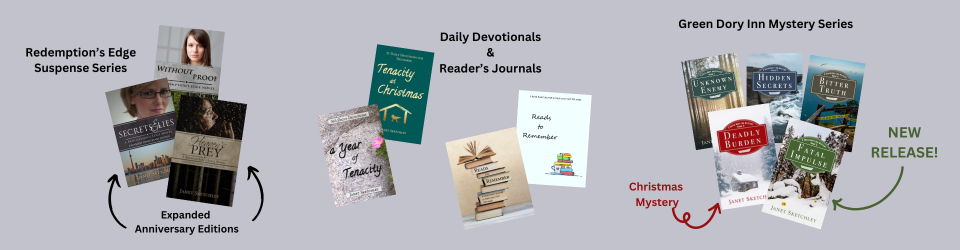
Heaven’s Prey: My Novel

I’m expecting a book! Yes, I hope for grandchildren when the time’s right, but I’m excited to finally see some of my “imaginary friends” come to life in print (or e-print). Over the next few months, I’ll introduce them to you.

The novel’s called Heaven’s Prey and it’s Christian fiction. Choose NOW Publishing  plans to release it in November.  Here’s the tag line:

A grieving woman is abducted by a dangerous offender—and it may be the answer to her prayers.

It’s about a serial killer’s last chance at redemption—not the gentle inspirational read many associate with the Christian genre. I’ve aimed for a suspense level similar to Brandilyn Collins or Terri Blackstock. Not as intense as Ted Dekker or Steven James.

Like this sort of thing? Great! I hope you’ll read it and spread the word.

Not your cup of tea? No worries! I hope you’ll tell your friends who might enjoy it.

Sign up for my author newsletter for advance news on Heaven’s Prey. Subscribers’ contact information will be kept confidential, and I promise not to overload your in-boxes!  [Sign up here or in the right-hand sidebar.]

I’m excited to be working with Choose NOW Publishing. As well as their new line of issue-driven books for adults and teens, Choose NOW Ministries has a popular radio show/podcast and a website filled with resources for parents and teens, specializing in hot button issues  and empowering teens to make good choices. Stop by and check it out!

Enemies of God?

You adulterers! Don’t you realize that friendship with the world makes you an enemy of God? I say it again: If you want to be a friend of the world, you make yourself an enemy of God.
James 4:4, NLT*

James uses strong language here to make us see the seriousness of divided loyalty.

We live in the world, but as Christians we’re to live by God’s wisdom and not by following the world’s way.

“World” has two meanings here. We live in the physical world and are called to bring God’s love to our fellow inhabitants, but we’re also called to demonstrate a way of life that doesn’t match the natural, unredeemed human mindset.

It’s not about being against the world. It’s about being for God, choosing to stay close to Him, guarding our relationship with Him above all else.

It’s about faithfulness. Loyalty. Loving this God who loves us so much more.

The more we resist the desires and thought patterns that would damage our intimacy with God, the more we can grow in the abundant life He wants to give us.

We want it all—want it both ways—and we fool ourselves that it’s okay. But it’s stunting our spiritual lives, making us poor examples of what God offers, and it’s making us much less than God designed us to be.

And it’s offensive to Him.

Holy God, You love us but You require our full allegiance. Please forgive our disloyalty and help us to live for You. Take Your rightful place in our hearts, exalted and adored, and help us conduct ourselves in a manner worthy of the hope and salvation You’ve so freely given us. 

∞

Our song this week is Vicky Beeching‘s “Undivided Heart.” May it be our prayer.

*New Living Translation (NLT) Holy Bible. New Living Translation copyright © 1996, 2004, 2007 by Tyndale House Foundation. Used by permission of Tyndale House Publishers Inc., Carol Stream, Illinois 60188. All rights reserved.

Review: Knowing God, by J. I. Packer

Knowing God, by J.I. Packer

Knowing God, by J. I. Packer (InterVarsity Press, 1973)

In this collection of material previously published in his columns in the Evangelical Magazine, J. I. Packer emphasizes the foundational importance of knowing God—and challenges readers to learn who the Bible says God is instead of going with who we think He is. As we come to know God’s character and attributes, we can trust Him. It’s hard to trust someone whose character you don’t know.

The book explores key attributes of God, including such things as His majesty, wisdom, truth, love, justice, wrath, goodness and severity, and His adequacy. It’s not meant for a casual read, but to be considered, pondered and prayerfully ruminated on. There is much in its pages to nourish Christians.

The writing style is scholarly and includes references to teachers and hymn writers whose names may be unfamiliar to contemporary readers. Taking the time to Google these names would introduce us to many stalwarts of the faith. Knowing God  is a valuable resource, and I’d love to see an updated edition for today’s readers. I think the deep content would be easier to process without textbook-level delivery.

Dr. Packer writes from a solidly Protestant/Evangelical point of view, and my Roman Catholic brothers and sisters won’t agree with his chapter about images of God. I’m not sure what to make of it, myself, but the chapter includes a challenge to examine one’s mental image of God to be sure it’s whole and true, and I found that very helpful.

Despite finding the book a hard read, I think it’s one that will benefit any Christian who takes the time to prayerfully work through it. For me, it’s a keeper that I’ll refer back to again.

Dr. Packer is a well-respected theologian and Board of Governors’ Professor of Theology at Regent College, Canada. In 2005, TIME Magazine listed him as “one of 25 most influential Evangelicals in America.” [Influential Evangelicals: J.I. Packer]

[Review copy from my personal library.]

Writing Stick-to-it-ive-ness!

Valerie Comer

Valerie Comer

Writing Stick-to-it-ive-ness! (Guest post by Valerie Comer)

Have you ever wanted something so much that you spent a decade learning how to do it with no guarantee you’d ever be successful. . . whatever that means?

Janet’s theme on this site is “tenacity.” It’s vital in so many areas of life. Sometimes we call it stubbornness, but tenacity and diligence sound so much more positive. Either way, it’s the ability to set a goal and dig your heels in until you’ve achieved it.

In 2002 I decided to learn to write fiction. Hours every day had suddenly opened up with nothing to fill them. I’d always toyed with the idea of writing a novel “someday,” and knew this was a God-given opportunity to take the next step. Actually the first step.

Only, I had no idea what that step was. How-to-write books from the library were of little help, but the relatively new Internet pointed to some sites where I could learn. And learn I did. I averaged one novel a year for nine years before I finally sold a novella (ironically unwritten at time of sale), and I’ve written two more since. Over half of these are unsalvageable drafts with huge problems.

The biggest hurdles for me were two-fold.

1. I had no concept of the over-all process. I couldn’t see the steps. You know the cliché “can’t see the forest for the trees?” Well, I couldn’t even see the trees for the twigs. I got bogged down in the minutiae of writing and struggled to find the horizon.

2. I thought writers were either seat-of-the-pants writers (pantsers) or plotters. It took me a long time to “get” that there was a large middle ground in which most writers live. Thus it took me about ten too many novels to find the best practices for me. Now I know better than to tell anyone “this is the way it must be done.”

This spring it seemed the time had come to pay forward and help other, newer writers develop their craft, so I opened a website, To Write a Story, dedicated to teaching fiction from beginning to end. It seems to me that there are six stages in writing: planning, plotting, writing, editing, publishing, and marketing. My goal is to provide an overview of each stage so that writers can keep the forest in mind while they’re focused on those twigs.

To Write a Story

I’ve chosen a two-prong approach:

1. It’s a blog. I post a helpful article every Thursday on one of the six stages. Most of them are written by me, but I accept a small number of guest posts, too.

2. It’s a course. Writers can sign up in the sidebar for my FREE writing course via email. You’ll get a new lesson every week for the better part of a year, walking you through the process from beginning to end.

If you’ve ever wondered just what all is involved in writing fiction, I invite you to subscribe to the course (and/or the blog) and join the 70+ people (about one a day since I opened the course) who are already enrolled. We’re having a lot of fun and I think you will, too!

Want to learn To Write a Story? Then join in!

◊◊◊

Valerie Comer’s life on a small farm in western Canada provides the seed for stories of contemporary inspirational romance. Like many of her characters, Valerie and her family grow much of their own food and are active in the local foods movement as well as their creation-care-centric church. She only hopes her characters enjoy their happily ever afters as much as she does hers, shared with her husband, adult kids, and adorable granddaughters.

Valerie writes Farm Lit with the voice of experience laced with humor. Raspberries and Vinegar, first in her series A Farm Fresh Romance, releases August 1, 2013, from Choose NOW Publishing.
Wisdom: More than Choices

But the wisdom from above is first of all pure. It is also peace loving, gentle at all times, and willing to yield to others. It is full of mercy and good deeds. It shows no favoritism and is always sincere.
James 3:17, NLT*

When we ask God for wisdom, it’s usually because we need to know what to do or what decision to make. Think of the stories and jokes about the guy who climbs the mountain to ask the wise man a question. It’s always about knowledge and choices.

Today’s verse, and I think the whole of James’ letter, says wisdom is about living wisely.

Living wisely as James defines it will result in wise choices because the wise Christian is living in obedience to the Master’s ways. This wisdom is the opposite of self-focused ambition and selfishness. It’s loyalty to God, following His path.

It’s bringing the human spirit in line under the Holy Spirit, submitting our wills to His and following Him instead of pushing ahead.

I think if we can live like this, we’ll find ourselves making the wise decisions we wanted in the first place, because we’ll be in tune with God.

God who is fully wise, Shepherd who is fully good, lead us in Your ways and train us in Your precepts. In You we find our wisdom, our health and our strength. We’re no good on our own. Help us stay in Your presence, where we can thrive.

∞

Think about Matt Redman‘s song, “We Could Change the World.”

*New Living Translation (NLT) Holy Bible. New Living Translation copyright © 1996, 2004, 2007 by Tyndale House Foundation. Used by permission of Tyndale House Publishers Inc., Carol Stream, Illinois 60188. All rights reserved.

Review: Tadeo Turtle, by Janis Cox

cover art for the book Tadeo TurtleTadeo Turtle, by Janis Cox (Word Alive Press, 2012)

Tadeo (TAD-ay-OH) Turtle loves who he is—until he starts comparing himself to others. Suddenly his beautiful shell feels like it’s holding him back. Without it, he’d be faster, leaner, more agile.

One night he dreams of life without his shell. Freedom! Or is it? When a hungry cat spies him, he’s not so sure he likes being unprotected.

Tadeo Turtle invites children to think about how they’re different from their friends, to recognize their friends’ positive attributes and to discover the value of their own individual skills and abilities.

In a society where so many people think poorly of themselves or of others, this little book is a good way to encourage respect for diversity. I appreciate the way it acknowledges God as the designer of our differences and thanks Him “for making me so wonderfully complex” (Psalm 139:13-14, NLT).

Children and adults alike will enjoy the whimsical watercolour illustrations as well as the story’s simple rhyme. The book includes a few easy craft activities, with more available online at Janis Cox’s Creative Saturdays page.

Author-illustrator Janis Cox is a former teacher who’s now concentrating on painting and writing.  For more about Tadeo Turtle, including a spot for children to share pictures of their turtle-related crafts, visit Tadeo’s page on the author’s website.  There’s also a Facebook page for Tadeo Turtle.  Best way to get to know the little guy? Read my Interview with Tadeo Turtle.

[Review copy from my personal library.]

Fear as Opportunity

Stress and pressure are like strong winds. They knock us off our feet and send us tumbling, flailing for support.

As long as we keep God at our backs, we can stand.

I often use the prayer picture of a piece of paper, wind-plastered against a cliff, pressed so tightly against the rock face that you can see every groove and jut in the rock.

Isn’t that our prayer as Christians? “Lord, shape me to be like You.”

Life’s struggles are often His best tools.

So why hadn’t I recognized that fear is only another tool? Carolyn Watts writes that “fear can be an asset—if we learn how to let it lead us closer to Jesus.” (see How to Turn Fear into an Asset)

Or as a good friend said to me the other day, “Fear is a driver—it can drive you to God, or deeper into fear. Pray to choose wisely.”

This puts fear in the same category as trials, temptations, stresses and even gifts: something God can use in our lives to develop perseverance and endurance. Instead of freezing up or shrinking inward, we can invite Jesus into our fear, ask Him to use it to draw us closer to Him—to let it press us into His likeness.

We can praise Him and rejoice over what He’s going to do, even though we can’t yet see what that will be.

Thanking God in our fear, instead of letting it close us off from Him… this is delightfully subversive and not at all what the enemy of our souls has in mind, I’m sure. But it matches Scripture: “For you know that when your faith is tested, your endurance has a chance to grow,” (James 1:3, NLT) and “Be thankful in all circumstances” (1 Thessalonians 5:18a, NLT).

It comes down to this: who/what do we believe is stronger, God or fear? The loyalty to God that I’ve been reading about in the Book of James gives me my answer.

Not that I’m going to welcome fear, to throw open the door and invite it in, but this breaks its power. This lets me press into God, lets me know I’m in good hands and it’ll be okay. No matter what.

[If fear is one of your struggles, I highly recommend following the posts at Hearing the Heartbeat, beginning with How Do You Hear God’s Don’t Be Afraid?]

Accept the Gift

All the days of the desponding and afflicted are made evil [by anxious thoughts and forebodings], but he who has a glad heart has a continual feast [regardless of circumstances].
Proverbs 15:15, AMP*

I’m reading Brenda Wood’s evocative book, The Pregnant Pause of Grief: the First Trimester of Widowhood, and most of her scripture quotes come from the Amplified Bible. This one hit me in a new way that I hadn’t seen in the versions I usually read.

It echoed what my husband had said only hours earlier: “You have the choice to enjoy each step of what you’re doing, or to let it make you miserable.” (Okay, I didn’t take notes… this is my paraphrase. But he’s a wise man.)

That, in turn, followed something God helped me see a few days earlier. I’m stepping into a writing opportunity that has me a bit scared. It’s also really exciting for me, but that day anxiety was following me around like the proverbial rain cloud. In the middle of the grocery store, I realized I had more choices than just the vegetables.

I could choose my attitude.

I was the only one choosing the anxiety-cloud heaviness. I could just as easily choose anticipation and a bit of glee. So I did. I let myself accept the good thing He wanted to give me, instead of letting fear turn it into a burden.

I guess for some of us, troubles aren’t the only things that test our faith and build endurance—gifts are, too.

This learning to take every thought captive and to let God renew our minds is one hard lesson. We’ll be still working on it when He calls us Home, but let’s encourage one another on the journey.

God our Creator and our loving Parent, every good gift comes from You, and You are not the author of fear. Help us learn to bring our thoughts under Your rule and to cultivate joy and contentment whatever our circumstances. And when You give us a good gift, help us not be afraid to open it.

∞

What more appropriate song than “Seize the Day,” by Carolyn Arends?

http://www.youtube.com/watch?v=7lmqtYR5tJo

*Amplified Bible (AMP) Copyright © 1954, 1958, 1962, 1964, 1965, 1987 by The Lockman Foundation

Review: Seraphina, by Rachel Hartman

Seraphina, by Rachel HartmanSeraphina, by Rachel Hartman (Doubleday, 2012)

What’s a young woman to do when she needs to be anonymous but has a musical gift that won’t stay hidden? Seraphina is an outsider. She doesn’t fit in, and she can’t risk letting anyone close enough to discover her secret. But her new job is to assist the court composer, direct the orchestra in his absence, and teach harpsichord to Princess Glisselda.

The story world has a mediaeval European or British feel, with kingdoms, castles and knights. And dragons who can look like humans. The dragon/human war ended in a truce almost 40 years ago, but there’s still deep distrust between the two sides. As the anniversary celebrations approach, hostilities are increasing.

Seraphina herself is a half-dragon, and that’s the source of her (and her father’s) shame. She looks human, except for a few scaly spots that she keeps hidden. She’s a biological impossibility, and an offense against both laws and morals. But the very things she thinks disqualify her from belonging may be the gifts she brings to keep the peace.

Because she understands both perspectives, she finds herself drawn into preventing a crisis that could plunge the world back into war. This means working closer than she’d like with Princess Glisselda and the handsome Captain of the Guard, Prince Lucian Kiggs. The more Seraphina cares for them both, the harder it is to deceive them about her true nature.

Seraphina is one of those rare books that I wanted to read slowly to make the story last. The characters, setting and plot weave a rich and enjoyable tapestry. They feel real, despite being so clearly not of our world. This is a novel I will read again.

Rachel Hartman has done a beautiful job of letting the characters struggle with issues many of us know intimately: belonging and truth. There’s no sense of a forced agenda or message-driven plot. The characters, especially Seraphina and Kiggs, live their questions in front of us, and we can relate.

There’s much more to the novel than I can describe in a review. If you’re at all fond of fantasy or historical novels and you’re not threatened by a quirky fictional religion, give it a try. And prepare to lose yourself in the pages. It’s a young adult novel by nature of the characters’ ages, but it’s a satisfying read for adults as well, especially those who may struggle with belonging or who love music.

Seraphina is, unbelievably, a debut novel. I’m glad there’ll be a sequel. You can learn more about Rachel Hartman and about Seraphina on her website.

[Review copy from my personal library.]

Interview: Janet Sketchley

question markNo, I’m not interviewing myself, although I do talk to myself at times…

But over at Where Writers and Authors Meet, I’m in the hot seat this week for a reader-directed interview: you ask the questions (deadline tonight) and I answer them. My host, Virginia Lori Jennings, will post the answers on Monday.

To join in, visit Come Ask Janet Sketchley Some Questions.