All who heard the shepherds’ story were astonished, but Mary kept all these things in her heart and thought about them often. Luke 2:18-19, NLT*
The shepherds saw wonders. Mary herself saw wonders! She held the Wonder of the world in her arms.
Do you think what she experienced in Bethlehem helped her keep hoping in the difficult days ahead? Surely it helped her worship this God who loved and chose her. She’d already seen Him provide, and she knew He wouldn’t abandon her and Joseph now.
Let’s be encouraged and inspired by Mary’s humble sense of obedience and trust. Let’s consciously keep in our hearts those precious times we’ve seen God touch our lives, and think about them often.
Maybe as we begin a new year it’s time to start (or re-start) a journal for gratitude or to track answered prayer. Or perhaps it’s time for a fresh commitment to keep watch for “God moments” in our days.
Precious, loving God, You are so kind in the ways You involve Yourself in my daily life. Whether it’s something major like Your call on Mary’s life or something as simple as helping me find a lost item, please help me recognize Your care. Help me keep these things in my own heart and think about them often, especially when the times of trouble come. May my spirit be kept in Your perfect peace because I know I can trust in You.
Prayer can be very short. But it can also become a rich, ongoing way of life.
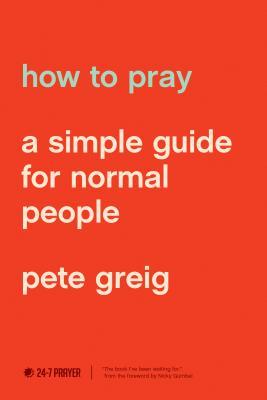
In How to Pray: A Simple Guide for Normal People, Pete Greig provides what Christianity Today called “An instant spiritual classic.” The introduction describes it as “a simple guide to the complex, living landscape of prayer….But there’s more to prayer than asking, and God is not in a hurry.” [p. 27, ebook version]
Each chapter flows from a different verse of The Lord’s Prayer, exploring nine approaches to prayer: stillness, adoration, petition, intercession, perseverance, contemplation, listening, confession, and spiritual warfare. Chapters conclude by featuring a “hero of prayer” representing that aspect.
They also include further recommended reading plus links to additional resources at the “toolshed” section of the Prayer Course website prayercourse.org—where you can also find free video lessons to accompany the book.
Don’t skip the book, though. It deepens the overall teaching. Plus, Pete Greig has a funny streak. You’ll find yourself snickering here and there.
How to Pray: A Simple Guide for Normal People is easy to read, an inspiring invitation, and a catalyst to go deeper into our prayer lives. Its sequel is How to Hear God: A Simple Guide for Normal People, which for some reason I read first. I highly recommend them both.
Q: What happens when a group of Christians decide to pray 24-7 for a short time, maybe a month or two?
A: It starts a movement that’s still going strong 25+ years later.
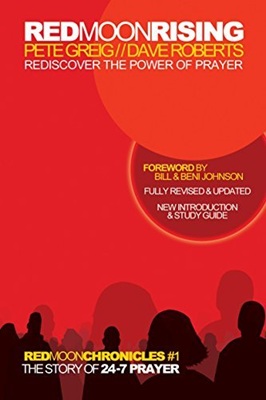
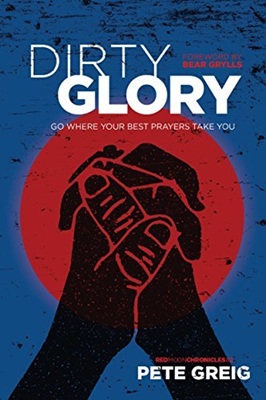
Red Moon Rising: Rediscover the Power of Prayer chronicles the 24-7 Prayer movement’s first five years, and Dirty Glory: Go Where Your Best Prayers Take You covers the next five and beyond.
This is clearly a story of what God did—through obedient people, to be sure, but there’s no way a group of humans could build and sustain an international, interdenominational movement like this. Nor could humans arrange the more dramatic experiences these books relate.
They began in prayer. Then they found themselves on mission in the strangest places, still praying but also serving and working for justice. This is an interdenominational movement that sees Christians from widely different backgrounds and denominational preferences serving and worshipping side by side for the glory of God. Looks like the Body of Christ to me.
If you want to be encouraged, even excited, in your faith, or if you’re just curious what this international 24-7 Prayer movement is all about, I highly recommend both of these books. Then, check out the 24-7 Prayer International website (or possible your country has one) for more details and resources.
The books read like novels, and if you have the chance to catch them in audiobook format the author’s energetic delivery adds to the impact. That’s what I did, but now I want to go back and read in print or digital so I can highlight the most impactful bits and also linger over some of the well-turned phrases.
The story doesn’t finish with the books. Have a listen to Pete Greig’s 25th anniversary message in 2024. As it happens, I’m posting this review on September 5, 2025—the 26th anniversary of 24-7 Prayer’s quiet beginnings.
Pete Greig’s biography on the 24-7 Prayer International website describes him as “a best-selling author, pastor and bewildered instigator of the 24-7 Prayer movement which has reached more than half the nations on earth.” For more about him, visit dirtyglory.org. For more about the 24-7 Prayer Movement or for prayer resources, visit 24-7prayer.com.
[Review copies from the public library via the Hoopla app.]
Load up your e-reader—or just take a few. For the month of April 2025, you can get up to 16 free Christian books from 16 authors in a variety of genres. (Psst: one of those books is mine!)
Check out the list here, and choose any that catch your interest. This is a “newsletter magnet” promotion, introducing readers to new-to-you authors by way of newsletter signups in exchange for a free ebook. You’re never obligated to keep the subscription, but I do suggest you check out the first few before making a decision to unsubscribe. Who knows what you might find? See the list of books here:Joyful Journey Christian Reads.
Can humans today hear from the God of the Bible? Not necessarily audibly, but can we know what He’s saying to us? If you’re curious, I highly recommend this book as an excellent, inspiring resource.
You can tell from the subtitle that it’s not a dry theological work. Instead, it’s a refreshing, accessible, and practical look at various ways Christians can “hear” God (and how to discern A: is it God, and B: am I hearing clearly?).
The key Scriptural passage acting as a framework for the book is the two travellers on the Emmaus Road from Luke 24, where the risen Christ walks with them and teaches them. And the emphasis is on hearing as a natural part of a conversational relationship with God.
While acknowledging Jesus as the Living Word, the book also addresses hearing God’s external word through the Bible, prayer, and prophecy, and His internal word in our spirits, in dreams, and in community, creation, and culture.
Chapters include examples from the Bible, personal experience, quotations from other works on the subject, and mini bio features of Christians both contemporary and historical.
Pete Greig is an excellent speaker, and by narrating his own book in audio form he makes it feel like hearers are listening to him on a podcast or at a conference. Now I want to buy a print copy to study in more depth. The questions for individual and group discussion will be helpful, as will the recommendations for further reading.
Subtitle: “How to Stay Emotionally Healthy and Spiritually Alive in the Chaos of the Modern World”
“The problem isn’t when you have a lot to do; it’s when you have too much to do and the only way to keep the quota up is to hurry.” (p, 21)
Can you relate? In this book, author John Mark Comer invites us to discover “what the way of Jesus has to say to the epidemic of hurry.” (p. 76)
He’s approaching the topic from a Christian perspective. However, there’s plenty of valuable content about the problem—and possible solutions—for people of other faiths or no faith.
Meticulously researched, quoting multiple sources and studies, the book is highly readable. Look at the endnotes too. Sometimes they expand on quoted material, and sometimes they’re funny. I found some other books I hope to read later.
There’s a link at the end to a digital workbook called How to Unhurry, which comes with brief teaching videos.
For me, this is a gateway book leading into his newer book, Practicing the Way, which I’m hoping will further expand on the principles I’ve just read.
Highly recommended. Thought provoking. And with practical suggestions on how to implement the practices of “Silence and Solitude, Sabbath, Simplicity, and Slowing.” Not everything will feel applicable, but if we gain only one or two things it will be a journey worth taking.
John Mark Comer is a teacher, speaker, and bestselling author with a refreshing delivery of longstanding truths we need to hear. For more about him and his work, including links to podcasts, his blog, and his newsletter signup, visit johnmarkcomer.com.
Last month, I shared some of my favourite podcasts and audiobook providers. But even the best of these can become little more than noise in this world of overstimulation. And coming out of the holiday season, rest—and quiet—may be exactly what you need.
Although quiet and rest are not the same, they are related. While being quiet doesn’t guarantee we will be at rest, it is difficult to truly rest and recharge without at least some periods of quiet. (Note: quietness isn’t necessarily the same as silence. For instance, you can go for a quiet walk surrounded by the sounds of nature.)
Dave Nickel at the Fairy Bridges in Ireland Photo Credit: Steph Beth Nickel
Saundra Dalton Smith, MD, identifies seven types of rest each of us needs, many of which we give little to no thought. In her book Sacred Rest: Recover Your Life, Renew Your Energy, Restore Your Sanity, the author examines the following types of rest: Physical Rest, Mental Rest, Emotional Rest, Spiritual Rest, Social Rest, Sensory Rest, and Creative Rest.
Depending on the audiobook I’m listening to or the podcast I have playing, I may be able to rest in one or more of these ways. However, there are times quiet is the best option. While I can fall asleep listening to a TV show, podcast, or audiobook (thank goodness for the snooze feature!), allowing myself to drift off without this type of auditory input can make for a more restful sleep.
Listening to anything that gets my mind racing is obviously not providing the mental or emotional rest I need. There are things that do, however. For example, I enjoy using Emily P. Freeman’s Quiet Collection and the One Minute Pause apps to wind down and “be present.”
While there are numerous auditory resources that help us develop our spiritual life, it’s important to enjoy the presence of the promised Comforter, the Holy Spirit, and listen to what He is teaching us through what we’ve read, heard, and experienced. It’s easier to do this if we regularly take time to be quiet.
And now we come to social rest. I can almost hear all the introverts out there cheering, but we extroverts may have a tough time with this one. I like listening to podcasts not only because of the subject matter but also because I enjoy the pseudo connection I’ve made with my favourite podcasters. I have to remind myself that I don’t always need someone to keep me company.
While sensory rest seems self-explanatory, we may need to remind ourselves of its importance, especially when we encounter resistance—external or internal.
And last, the author of Sacred Rest examines creative rest. She refers to a friend who rests by pulling out her art supplies and creating a painting. While the very thought of doing so may cause us anxiety, there is likely something creative each of us finds restful.
How about you? Do you enjoy sitting down at the piano and playing your favourite song? Grabbing your camera and going for a photo walk? Baking a batch of cookies? Art journalling? Writing a poem?
As we enter the new year, let’s commit to stepping back from the noise and embracing the rest we need.
How are you going to do so?
Photo credit: Jaime Mellor Photography
As an editor, Steph Beth Nickel has the honour of coming alongside writers to help them polish their work. As the coauthor of Paralympian Deb Willows’s memoirs, Steph has been blessed to work with this amazing woman. And as a future self-published author, with the Lord’s help, Steph has taken brave steps toward publication.
Why is it important to know that God has a name other than “God”? That He revealed His name to Moses and to the people He had chosen?
Lots of people talk about God… with lots of variations on who they think He is. So His name, as revealed in the Bible, tells us who we’re talking about. So to quote the prologue, “The question at the heart of this book [is]: Who is God?” And the answer is important, because the prologue also asserts that “We become like what we worship.”
So this is a book for Christians (others are welcome too) where we can check our ideas about God against what He says about Himself, with a view to learning to follow in His ways. There’s a lot of misinformation about God floating loose in society, and we’re not immune to absorbing some of it. That’s why we need books like this one.
In six chapters, God Has a Name dives deep (yet accessibly) into the text of Exodus 34:4-7, where God told Moses His name: Yahweh, often rendered in our Bibles as “The LORD.”
Lest that sound heavy or dry, let me say I love the friendly, conversational tone. This is not your great-grandparents’ stilted theology text. It’s deeply researched, drawing from many contemporary and long-past writers, and the occasional Hebrew word does pop up, but I found the delivery refreshing.
We can (and should) read this Bible passage on our own, prayerfully spending regular time in the Scriptures. There’s much more to it than I’ve ever dug up on my own, though, and I’m grateful for John Mark Comer’s teaching on it.
Each chapter begins with a portion of the passage. The pattern is to: 1) explore the original language, 2) look at where the passage shows up elsewhere in the Bible (it’s quoted or referenced so many times!), 3) look at how Jesus reveals this Exodus-Named God in the New Testament, and 4) “think about what who God is means for who we are” (prologue) and how that might reshape us.
I found this book invigorating, and I definitely need to read it again. Highly recommended! You can read the first chapter online here. Or for a taste of the full contents, check out the author’s God Has a Name sermon series at Bridgetown Church, Oregon. Just click the name of each installment to listen.
New York Times bestselling author John Mark Comer is currently based in Los Angeles, working with Practicing the Way (check the site for spiritual formation resources). To learn more about the author and his ministry, visit johnmarkcomer.com. Scroll down far enough, and you’ll find various podcast options as well as his books.
[Review copy from the public library via Hoopla Digital.]
If you’re looking for an instructional book on practicing the spiritual disciplines, this isn’t it. But if you’re looking for a memoir of an ordinary layperson trying to get closer to his God and grow in his faith, The Making of an Ordinary Saint is a good choice.
It’s a candid look at one man’s search to follow the spiritual practices modelled by Jesus and in so doing to lose the frustration that seems to be taking over his life.
Each chapter shares his attempts to focus on a different discipline, introduced by a brief explanation of that discipline. He’s honest about the struggles, the failures, the benefits, and the costs. He also includes a few “interlude” chapters warning of potential hazards. (Hazards to spiritual disciplines? Oh, yes. For example, can you say “pride”?)
Subtitled “My journey from frustration to joy with the spiritual disciplines,” this book includes a foreword and reflections by Richard J. Foster, author of Celebration of Discipline (and father of Nathan Foster).
I found the original Celebration of Discipline inspiring. Truth told: Most of what I read remained head knowledge instead of moving into my daily walk with the Lord. That’s not the book’s fault, and now that the spiritual disciplines are again on my mind I hope to be more intentional about them.
I was slow to engage with this book because the author’s frustration came through so clearly that I started feeling it too. Negative emotions transfer too easily. But his story drew me in, and his journey reminded me of the hope the disciplines offer of closeness with God.
This is not a book that will leave “regular” readers feeling they’ll never measure up. But it gives glimpses of reward that make the cost well worth paying.
One of the things Nathan Foster learned, something I think so many of us need to internalize, is this:
“… a clear and deep knowing of God’s love for me has been the key remedy I needed to untangle many of the problems I faced. …I have come to believe that God’s love is the central message of Christianity, that living the kingdom life must be born out of an active response to a deep knowing of one’s place as a much-loved daughter or son of the Author of Life.” (p. 66)
I’m grateful for the chance to read The Making of an Ordinary Saint, and I highly recommend it to anyone desiring a closer relationship with God. We would do well to follow it up with Celebration of Discipline and with some of the resources at Practicing the Way, the ministry related to the book by John Mark Comer. (I’ve only listened to some of their material to date and haven’t yet read the book. What I’m hearing is resonating.)