Author Archives: Janet Sketchley

About Janet Sketchley

Janet Sketchley is an Atlantic Canadian writer whose Redemption’s Edge Christian suspense novels have each been finalists in The Word Awards. She's also the author of the devotional collection, A Year of Tenacity. Janet blogs about faith and books. She loves Jesus and her family, and enjoys reading, worship music, and tea. Fans of Christian suspense are invited to join her writing journey through her monthly newsletter: bit.ly/JanetSketchleyNews.

Fiction 101 writing course

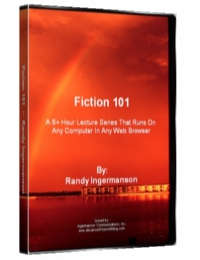
Product Review: Fiction 101, by Randy Ingermanson

Fiction 101 writing courseFiction 101, by Randy Ingermanson

Best known as “the Snowflake Guy”, novelist Randy Ingermanson is a popular teacher of fiction writing techniques and marketing. His Fiction 101 is a series of lectures and handouts that writers can use as part of their professional development.

Some of the material included in this course is available on his website: definitions of different writing stages, the Snowflake method etc. I’d recommend checking out what writing level you’re at before buying, although even the most experienced writers can benefit from a refresher of fiction basics.

Fiction 101 is for people who want to write novels, and it looks at the craft and components – and the necessary commitment. Randy’s lectures are easy to follow and laced with humour. He gives practical examples of what works and what doesn’t, and often suggest books for further study.

The course looks at key issues like characters, motivation, point of view, plot (on three levels: the big picture [beginning – middle – end], the medium picture [scenes and sequels] and the little picture [motivation-reaction units]), dialogue, theme.

Fiction 101 wouldn’t be complete with Randy’s signature “Snowflake” method for novel design. If this course isn’t for you, you might still want to check out his Snowflake method.

He says he doesn’t teach writers to create, but to analyse and organize that creation. This can be done ahead of time or after the first draft, whichever suits your style. He encourages students to adapt the Snowflake stages to suit their needs.

To help you along, the course includes a blank character chart and a sample Snowflake and scene spreadsheet.

As well as the basic craft of fiction, Fiction 101 addresses work habits and conferences. These talks come at the end of the course, after we’ve studied the basics of the craft, and they’re very candid about the work involved. Having come this far, we’re not likely to scare easily, but if we’re to progress we need to be intentional.

Randy Ingermanson bills himself as “America’s mad scientist of fiction writing.” His monthly Advanced Fiction Writing E-zine always contains something helpful. It’s free, and back issues are available on the site. Along with his six novels, he’s also written Writing Fiction for Dummies.

Fiction 101 is available as an electronic download for $80 USD. You can listen to the first Fiction 101 lesson for free.

Take Flight Progressive Interview

Author and social networker Patty Wysong started Take Flight as a way to encourage, inspire and connect bloggers. This week’s Flight is a progressive interview, and the questions have been a lot of fun.

Here’s my question, and my Take Flight blogging friends’ answers. Each blogger’s name is linked to her own blog. Follow the links and discover other intriguing questions… and answers.

Thanks for setting this up, Patty!

Question: In what way(s) have your characters rubbed off on you? (for the better, we hope!)

Diana Lesire Brandmeyer: I’ve learned that I really do appreciate living in 2012 not 1886 but I have learned to take things at a slower pace. I’ve come to enjoy making dinner more than before and am learning to use herbs and fresh ingredients. I take time to enjoy the small tasks like baking and planting.

Sharon Clements Srock: I think my characters have made me a stronger person, more determined to go for what I want. It’s hard to write about determined women and be a wimp.

Joanne Sher: I think my main character has taught me SO much about myself – and even given me some ideas on handling conflicts and such. She started out as, basically, me transplanted to Biblical times. She’s becoming her own woman as I “fix her up,” but writing about her has made me see myself more clearly. Weird, eh?

Yvonne Blake: I think it’s often the other way around for me. I tend to put a little bit of myself in each of my characters. (Sometimes, though, I give them traits that I wish I had the courage to show – ex. boldness to speak up and act without fear of what others may say.)

Valerie Friesen Comer: Interesting question, because I usually think of it the other way: what of myself do I put in my characters? By giving my characters traits that I see in myself, though, I can push the envelope to make them deal with it. This helps me explore the trait and hopefully find ways to deal with it in my own life as well. But don’t go looking too deeply into my characters to find my issues! The characters are always a blend of a bunch of people with other traits tossed into the mix.

Linda McQuinn Carlblom: My characters keep me young! They’re all children, none over 14 or 15, and they force me to think and speak like someone their age. I have to remember how I felt at their age and write that into the story. So I have a greater empathy for kids because of my characters.

Donna Winters: I seem to sympathize emotionally with my characters. If they’re having a bad scene, my husband says I’m irritable. I find their snappy dialog slipping into my real-life dialog. Poor Fred. He’s quite tolerant and forgiving. 🙂

Sharon Hoover: My characters have made me more reflective. To better write about an emotion … and be able to show the feelings … I’ve had to deeply examine my own heart and motives as well as be more attentive to those around me.

Patty Sargent Wysong: My characters have helped me see life and its situations differently from how I used to see things. There’s a whole new world out there when I look at things through the eyes of my characters and when I listen to their explanations of things, often it meshes with my view and gives me a clearer picture of what’s going on. Of course, that means I hear their voices in my head, too. They’re loudest when I’m doing the wrong thing. My cast of characters has made for some interesting times in my head, but they’re each leaving a mark on me, just like my living-breathing friends do.

Kristi Peifer: It’s sort of like acting … you delve into another person’s psyche and learn all about their feelings and their quirks. Some of my favorite characters have been the ones with snappy one-liners, but I’ve also learned from the tragic characters.

Christina Rich: My characters have shown me that it doesn’t matter what the world thinks as long as I’m following God.

Janet Sketchley (that’s me): Learning to understand my characters has taught me to think more about real people’s motivations and give them the benefit of the doubt. One of my characters has given me a new appreciation for Billy Joel and for peppermint tea. I was hoping her housekeeping tendencies would rub off instead, but no such luck.

What about you? Whether you’re a writer or a reader, tell us how fictional characters have rubbed off on you? 

Powered by Linky Tools

Click here to enter your link and view this Linky Tools list…

Antidote for Discouragement

Let us run with perseverance the race marked out for us, fixing our eyes on Jesus, the pioneer and perfecter of faith. For the joy set before him he endured the cross, scorning its shame, and sat down at the right hand of the throne of God. Consider him who endured such opposition from sinners, so that you will not grow weary and lose heart.
Hebrews 12: 1b-3, NIV*

This Easter, what I needed to hear most wasn’t “He is risen” but “nothing can keep Him from coming back.”

I’m tired. There’s an overwhelming amount of pain in the world. Barely any of it is touching me today, but it’s touching plenty of others. And to be honest, the future looks dark and getting darker.

The Last Trumpet might sound awfully good right about now. But it’s not yet time or our ears would be ringing.

There’s still work to do, people to love, mercy to show. How do we keep from “growing weary and losing heart”?

We look at how Jesus did it. He listened closely to the Father, and only did what He saw the Father doing. He knew the Cross was coming, but He stayed in the moment with the people around Him. He didn’t try to carry the pain before its time. When it was time, He kept focused on His ultimate goal.

Father, this world will get worse before You make it better. I’m glad we don’t know how much. And I’m glad we know You and Your promises for the end. Forgive us when we look at the circumstances and get weighted down. Train us to keep our eyes fixed on Jesus, our example and our Saviour, and to keep our hearts fixed on You.

Here’s the song that undid me on Good Friday: “Rise Again,” sung here by Dallas Holm.

*THE HOLY BIBLE, NEW INTERNATIONAL VERSION®, NIV® Copyright © 1973, 1978, 1984, 2011 by Biblica, Inc.™ Used by permission. All rights reserved worldwide.

A Second Cup of Hot Apple Cider

More Kudos for A Second Cup of Hot Apple Cider

A Second Cup of Hot Apple CiderPositive reviews and reader comments started appearing soon after the release of A Second Cup of Hot Apple Cider last year. You can read some of them on the Hot Apple Cider Anthologies website (follow the links above).

I didn’t do a review because I have a story in it—didn’t seem proper, even though I really enjoyed the other selections and would love to tell you how great they are. There’s something for everyone, though: true life, fiction, poetry, spoken word, allegory/parable, serious, reflective, humour and more.

The reviews and author appearances continue (37 of us across Canada) and now that the book has been out long enough to be considered for awards, those are starting to show up too.

A Second Cup of Hot Apple Cider was named 2012 Book of the Year in the gift book category by the CSPA (Christian Small Publishers’ Association).

My story, “The Road Trip That Wasn’t,” received first place in InScribe Christian Writer’s Fellowship’s 2011-2012 members-only contest for published work. You can read an excerpt here.

Expect to see a lot of Second Cup selections on the short-lists for the Canadian Christian Writing Awards later this spring.

5 Online Writing Courses, Plus a Bonus

Online courses mean we can more easily fit lessons into our schedule, and we can learn in our favourite jammies.

Here are some that come highly recommended:

Donna Fawcett offers a one-on-one creative writing course consisting of ten online lessons on the basic elements of creating a manuscript, preparing it for publication and approaching the market in the correct manner. Technical aspects include creating characters, scenes and plots; practical applications include creating the query letter, dealing with scam agents and facing editing.

Elsie Montgomery offers a one-on-one course on How to Write Bible Studies. It’s an eight unit course, extensive, personalized instruction on writing the Bible study of your choice. Click here for syllabus (She also has intro booklets on writing non-fiction and Bible studies.)

Edie Melson offers one-on-one coaching on social networking. I’m in her ACFW class this month (see below) and can tell you she’s a great coach and gifted at communicating with people of all skill levels.

Lawson Writing Academy offers monthly group courses with Margie Lawson and other faculty. The one I took (Empowering Character Emotions) felt like a university-level workload. But did we learn!

One of the benefits of membership in ACFW (American Christian Fiction Writers – but they accept international members too) is the free monthly group courses on various aspects of fiction and marketing. Worth the annual membership fee!

For more, here’s an article by Joanne Sher that recaps what she learned through a Lawson Academy course as well as from some quality publications.

Committed to God

I will also bless the foreigners who commit themselves to the Lord,
who serve him and love his name,
who worship him and do not desecrate the Sabbath day of rest,
and who hold fast to my covenant.
Isaiah 56:6, NLT*

Have we committed ourselves to God—bound ourselves to Him, in some translations?

We did at the moment of our salvation, but do we remember it and live it as strongly as we’d intended?

Committed to God: to belong to Him and to rely on His protection and grace.

Serving God: not to please ourselves, not to please others.

Loving His name: loving who He is, loving and proclaiming His character and reputation.

Worshipping Him: honouring, praising, obeying Him as God alone; keeping our minds and hearts fixed on Him.

Not desecrating the Sabbath: embracing and receiving the rest He gives. (For those who see the New Testament Sabbath rest as more than observing one day as holy, as a daily and ongoing rest, this is even more profound.)

Holding fast to His covenant (His new covenant, as established by the shed blood of Jesus): clinging to our salvation and walking in His light.

God who is worthy of worship and praise, God who saves us and changes us from foreigners to adopted daughters and sons, help us to fully commit ourselves to You. Help us serve and love You, worship You and live to Your glory. Help us live like the people You’ve called us to be, and keep our hearts fixed on You.

Let MercyMe’s song, “In You,” be our prayer today.

https://www.youtube.com/watch?v=v-86VTOuZWQ

*New Living Translation (NLT) Holy Bible. New Living Translation copyright© 1996, 2004, 2007 by Tyndale House Foundation. Used by permission of Tyndale House Publishers Inc., Carol Stream, Illinois 60188. All rights reserved.

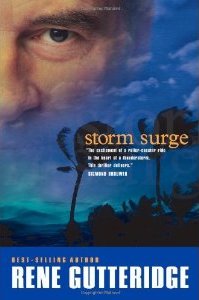
Storm Surge, by Rene Gutteridge

Review: Storm Surge, by Rene Gutteridge

Storm Surge, by Rene GutteridgeStorm Surge, by Rene Gutteridge (Tyndale House, 2005)

FBI Agent Mick Kline is a storm chaser in his spare time. Not that he has much of that these days. The suspect he and his partner have been investigating dies in a suspicious fire, and suddenly his case is tangled with another bureau’s ongoing arson investigation.

The two departments aren’t known for working well together, but a mutual attraction between Mick and his opposite number, Special Agent Libby Lancaster, helps—until she’s sidelined by an injury. Mick’s feelings add another complication: after years of being single, there are now three women on his radar.

At the same time, Mick is receiving anonymous notes that point to a long-ago crime and suggest that a man on Death Row may be as innocent as he claims. Mick needs to uncover the truth before the execution.

There’s much more to this novel, and including flashbacks to the Vietnam War and to the trial that convicted a possibly innocent man of murder. It builds to a life-or-death climax in the heart of a hurricane.

Storm Surge is the third in Rene Gutteridge’s Storm series, and is heavily influenced by Mick’s experiences in the first two novels, Splitting Storm and Storm Gathering. Leave it to me to unintentionally start a series at the end, but everything a new reader needs to know is provided. Mick is an enjoyable character, and I’d like to go back and read the first two novels even though I now have major spoiler information.

The Tyndale House website says Storm Surge is out of print, although there are still copies available through cbd.com. The novel is also available as an ebook.

Besides the Storm series, Rene Gutteridge has written the popular Boo series and other novels. Her first novel, Ghost Writer, releases as a reprint in June 2012.

[Review copy from my personal library.]

Thoughts on Good Friday

Good Friday is always a difficult day for me, facing the sacrifice that Jesus made for us–for me–and wishing there’d been another way. Recently at Hearing the Heartbeat, Carolyn Watts looked at it a little differently and discovered:

As much as I want to be able to bear my own blame, it would destroy me. If I want to be His, I must let Him kneel at the scourging post, hands tied above His head, let Him take every last stroke of that fiercely studded whip that should have been mine, and continue, body already broken, down the road to the cross, that final doorway into the heart of enemy territory. If I want to be His, I must receive the gift of Himself.

Read Carolyn’s entire post at The Words You Never Dreamed He’d Say, and let it bless you today.

Not Just Going to Heaven

But he was pierced for our transgressions,
he was crushed for our iniquities;
the punishment that brought us peace was on him,
and by his wounds we are healed.
Isaiah 53:5, NIV*

“Why should I believe in Jesus?”

“So you can be saved from your sins and go to Heaven when you die.”

As a child, that’s how I thought. But there’s so much more to it than that.

Even “saved from your sins” means more than fire escape. It means freedom from their domination and from the destructive mindsets we’ve accepted. Freedom from ourselves, too!

And healing for our brokenness. Peace for our anxious spirits. Forgiveness… and the strength to forgive.

Most of all it means a relationship with the God who formed the universe and who welcomes us like a longing parent welcomes a long-lost child.

He’s with us. He’s our strength for today and our hope for tomorrow. He won’t leave us, always understands us, and His presence makes the difference in whatever we’re going through.

At Other Food: daily devos, Violet lists some of the facets of this salvation Jesus bought.

Holy and merciful God, we were all damaged goods, without hope of healing. But Jesus came willingly to be our Saviour. Thank You for the grace to believe. Open our spirits to receive the full extent of the healing and restoration You want to work in our lives, and help us to be living examples to those who still need to come to You.

The Newsboys used to do an extended version of their song, “I Am Free,” where Peter Furler (former lead singer) quoted parts of Isaiah 53, ending with today’s verse. This is the Gospel message: for now as well as when we die.

*THE HOLY BIBLE, NEW INTERNATIONAL VERSION®, NIV® Copyright © 1973, 1978, 1984, 2011 by Biblica, Inc.™ Used by permission. All rights reserved worldwide.

Review: Forlorn River, by Zane Grey

Forlorn River by Zane GreyForlorn River, by Zane Grey (first published by Harper & Brothers, 1927)

In the old west, Ben Ide is a wild horse hunter in Northern California. Cut off from his family because his father disapproves, 20-year-old Ben shares his homestead with two other cast-offs: his partner, who won’t speak of his past and goes by the nickname “Nevada,” and a Native American called “Modoc” (after his people).

Nevada and Modoc are fiercely loyal to Ben because he’s been kind to them, and their skills make the difference in the adventure of Forlorn River. It seems the only others who think well of Ben are his sister, Hettie, and his childhood sweetheart, Ina Blaine. And the sheriff, although rumours are flying that Ben’s a cattle rustler.

Ben’s and Ina’s fathers have recently struck it rich, and the money has gone to their heads. A shady character named Setter has worked his way into their dealings and turned them against one another. Now he wants to discredit Ben and steal his land, and he has his eye on Ina.

Forlorn River was first published in 1927, and although there’s a lot of action, the writing style makes it a gentle read. Zane Grey was a storyteller, far different from the current advice to “show, don’t tell.” His omniscient, distant point of view means the reader doesn’t engage as deeply into the story. Emotionally intense stories tire me (and sometimes frighten me away), and this one is a safe, solid read.

I was surprised by the amount of mild profanity in the novel. Not that I think people’s language was any cleaner back then, but since the book presents violence and sexuality in a restrained way with nothing explicit, the language really stands out.

Because it’s an older work, don’t look for political correctness in the wording. Modoc is a caricature in the way he speaks, and even good-hearted Ben makes some casual comments that would cause serious offense today.

Although the narrative is at times wordy, something about the story drew me in and I enjoyed it. The ending satisfies, and leads directly into the sequel, “Nevada.” Guess whose story that tells?

The Zane Grey Inc. site lists the author’s books and tells about his life.

[Review copy from the public library via inter-library loan.]