Rest: 5 links and a bonus quote

Here are some posts that have spoken rest to my spirit:

Tranquility: river rocks

Kejimkujik National Park, Nova Scotia (photo credit: Janet Sketchley)

Margaret L. Been’s beautiful poem, “At His Feet.”

Emily Freeman’s “The Art of Rest” at (in)courage.

Rose Harmer writes about “Rest” at Under the Cover of Prayer.

At Roller Coaster Suspense, Marcy Dyer looks at exhaustion and priorities: “Noodled.”

And at Hearing the Heartbeat, Carolyn Watts reminds us that it’s not about working harder and pushing through the pain. It’s about resting in God. Read “Gifts from Your Personal Trainer.”

Bonus: In Refresh: 19 Ways to Boost Your Spiritual Life, Ron Hughes explores the value of rest. He says:

“Sabbath rest … reminds us that we did not make the world, that we are not in charge, and that everything will not grind to a halt if we reduce our activity level. Sabbath is not a reward for us getting all of our work done … we can relax in our awareness that we trust God, not ourselves, to meet our needs.” [Refresh, pp. 151-152]

Fear of the God Who Loves Us

Fear of the Lord is the foundation of true wisdom.
All who obey his commandments will grow in wisdom.
Praise him forever!
Psalm 111:10, NLT*

Fear of the Lord is one of those things I’m still trying to understand, and I’m sure that people who try to scare others into the Kingdom of Heaven have missed the point.

But the Psalmist says fear of God is the basis for wisdom.

People explain it as “reverence for the Lord” and that helps a bit. Others say, “fear God or fear everything else.” That makes it a bit clearer.

Reading the book of Matthew in the New Living Translation, I feel like the proverbial penny has dropped. In Matthew 9 we have the story of Jesus saying to a paralyzed man, “Your sins are forgiven. Get up, pick up your bed and go home.”

Look at the crowd’s response:

Fear swept through the crowd as they saw this happen. And they praised God for sending a man with such great authority. (Matthew 9:8, NLT*)

Picture yourself in the crowd. I’d be afraid, wouldn’t you? This is power beyond our imagining. This is the God who is good, but not safe.

This is the God who is bigger than whatever situation threatens to paralyze me with fear. He doesn’t guarantee to provide a miraculous way out, but He does promise to be with me. And with Him in trouble is better than on my own in a safer place.

Holy and mighty God, a glimpse of Your power could undo us, yet we’re drawn to Your presence. Help us  understand and believe that we’re held in Your keeping, and that You are stronger than anything we could fear. Help us accept the paradox that in Your love and grace, You may not rescue us from what we fear, and help us trust that Your presence with us will somehow work even the darkness to good in Your time.

∞

Third Day’s “Consuming Fire” reminds us of God’s power.

*New Living Translation (NLT) Holy Bible. New Living Translation copyright© 1996, 2004, 2007 by Tyndale House Foundation. Used by permission of Tyndale House Publishers Inc., Carol Stream, Illinois 60188. All rights reserved.

A Gift Book, and a Special Offer

A Second Cup of Hot Apple CiderA Second Cup of Hot Apple Cider released one year ago, and has already reached bestseller status in Canada (5,000 copies sold). Many of the entries are short-listed for The Word Guild’s Canadian Christian Writing Awards, my story won an award in the InScribe members-only contest, and the anthology itself was awarded 2012 Book of the Year: Gift Book Category by the Christian Small Publishers’ Association.

To celebrate, the publisher is offering a special deal for the month of May 2012: Buy a copy of A Second Cup of Hot Apple Cider and get a free copy of the original Hot Apple Cider. Just in time for Mother’s Day and Father’s Day!

Visit the Hot Apple Cider website for more information. And follow this link if you’d like a sample of my story, “The Road Trip that Wasn’t.”

Called to Write?

Writing

[Photo credit: Wikipedia, public domain]

Some of us know we’re called to write. That gives strength to hang on in the tough times.

I’ve never been sure. It’s just something I do. God has prompted me with a devotional thought to share here each week, so I’m pretty sure that’s part of my current assignment.

But fiction? All I know is it’s fun to write, and something in me comes more alive when I’m discovering a story. If that’s the whole point of it, I’ll embrace the gift and enjoy it. If He wants to bless someone through it, that’s great too and I’m relying on Him to connect the words with the person because it ain’t happenin’ through my own efforts.

Mary DeMuth is a writer who’s encouraged many other writers. Here’s a post she wrote in 2010 that I only just found. If you’re wondering about writing and calling, please click over and read Called to Write? Ten Ways to Know. Note she distinguishes between “called to write” and “called to write, be published and widely read”.

And you know what? “Not called” doesn’t mean “don’t write.” It just means writing is optional. If you’re called, better obey.

Related link: “Why Do You Write?” by Lisa Hall-Wilson.


Self-pity or God-praise?

Are they servants of Christ? (I am out of my mind to talk like this.) I am more. I have worked much harder, been in prison more frequently, been flogged more severely, and been exposed to death again and again.
2 Corinthians 11:23, NIV*

The Corinthian believers have been listening to trendier leaders than Paul, and while those leaders may have a better delivery they aren’t delivering the truth. In this passage, Paul is reminding these Christians of his “credentials.”

His litany of sufferings prove he’s serving Christ—to the point of enduring persecution. But he’s not talking like a victim, nor a beaten-down fighter.

Instead of “poor me” he’s boasting about this. Not that he’s proud of the suffering as such. He’s saying “See how much Jesus trusts me—He knows I’ll keep focused on Him, and others will hear.” And “See how good He is to sustain me and to advance His kingdom even when its enemies throw everything they’ve got.”

That’s what happened in the jail in Philippi when Paul and Silas were singing praises to God. They showed how to “rejoice in the Lord always.”

Praise and thanksgiving really do work when we want to keep our spirits set on God.

Father, Sustainer of our spirits, most of us haven’t faced the abuse Paul did, and a lot of what we’ve endured hasn’t been because of persecution. But we still need to keep our eyes on You and our hearts tuned in praise and worship. You are God. Help us anchor in You. Strengthen us so others will see Your goodness and love even when we’re in hard times.

∞

Casting Crowns’ “Praise You in this Storm” is a good song to keep us focused.

*THE HOLY BIBLE, NEW INTERNATIONAL VERSION®, NIV® Copyright © 1973, 1978, 1984, 2011 by Biblica, Inc.™ Used by permission. All rights reserved worldwide.

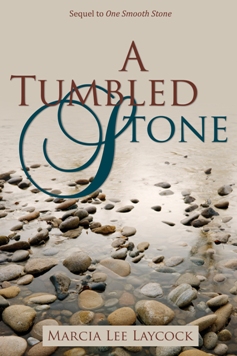
A Tumbled Stone, by Marcia Lee Laycock

Fiction by Marcia Lee Laycock

One Smooth Stone was the best Christian fiction I read in 2007. After a long wait, the sequel is finally out: A Tumbled Stone.

Here’s a refresher on One Smooth Stone, and a link to a review of A Tumbled Stone.

One Smooth Stone is a compelling read about hurt people fumbling toward healing, and about a God who won’t let go.

Marcia Laycock’s writing style is vivid and rich with sensory detail. She draws on her time in the North to evoke a strong sense of place. It would be worth reading just to experience the Yukon setting from our warm living rooms, but she also gives us lifelike characters to root for, suspense, and a puzzle to unravel.

Protagonist Alex Donnelly is a man with secrets, and Marcia Laycock brings them to light slowly, compassionately, and with a defter touch than a debut novelist should have. Alex’s and the other characters’ pain is neither minimized nor exploited, and it’s brought to light in a way that didn’t traumatize this chicken reader.

Hard questions and spiritual issues are treated naturally, with none of the heavy-handed preaching or pat answers found in some Christian novels. The story feels real, and it offers hope.

This is a story for adults, male or female, wounded or whole. You can read the opening chapter of One Smooth Stone here.  [Review copy from my personal library.]

Marcia Lee Laycock is a Canadian writer, speaker and pastor’s wife who lives in Alberta. You can learn more about Marcia and her books (novels and non-fiction) at her website, Vinemarc Communications, and read an interview on the Hot Apple Cider site. A Tumbled Stone, by Marcia Lee Laycock

Laura Davis’ review of A Tumbled Stone at Maranatha News begins like this:

A Tumbled Stone by Marcia Lee Laycock is the much anticipated sequel to One Smooth Stone and it doesn’t disappoint. Laycock is a gifted writer and has written a flawless story that tackles many issues such as teenage pregnancy, abortion, forgiveness and even autism. [Read the full review.]

I haven’t read the novel yet but I’m looking forward to it! Marcia’s books can be ordered through her website or through your regular bookstore.

butterfly

Trust

My friend Jan Cox has dubbed this the Year of Trust.  I’m focusing on relentless gratitude, and there’s a definite cross-over. Gratitude to God reinforces trust in God.

Here are some links I’ve found helpful:

Carolyn Watts’ posts at Hearing the Heartbeat often bless me.  Here she offers a simple reminder of what trust can look like.

At Something About the Joy, Ginny Jaques shares Four Things About God that Make Life So Much Easier.

At Dreaming Big, Heather Boersma encourages us to let our words affirm our dependence on God and speak life, not death. That sounds like trust to me.

At Promises for All Who Are In Christ, Natalie Gidney lists several promises from God that define who we are in Christ. Good to memorize for when the doubts fly.

And Janice Dick reminds us of God’s protective hold on us.

What Does Victory Mean?

But thank God! He gives us victory over sin and death through our Lord Jesus Christ.
1 Corinthians  15:57, NLT*

Jesus won the ultimate victory, and if we trust Him, we’ll spend eternity with Him when we die. But in the here and now, what are some of the ways we have victory in Him?

In Christ, I

  • can replace the devil’s lies with truth
  • can learn to see with His perspective instead of my own
  • don’t have to feel sorry for myself
  • find strength beyond my own
  • am forgiven when I sin
  • am freed from the tyranny of sin
  • can love when it doesn’t come naturally
  • can give grace, instead of retaliating
  • can be secure in His acceptance, instead of fearing rejection or failure
  • have access to the God of the universe, who loves me
  • belong.

Merciful and holy God, thank You for rescuing us and for promising to never leave us nor reject us. Forgive us when we forget the benefits of being Your children, and help us learn to live secure in Your victory.

∞

Our victory song this week is Kathryn Scott’s “I Belong.”

*New Living Translation (NLT) Holy Bible. New Living Translation copyright© 1996, 2004, 2007 by Tyndale House Foundation. Used by permission of Tyndale House Publishers Inc., Carol Stream, Illinois 60188. All rights reserved.

Fiction 101 writing course

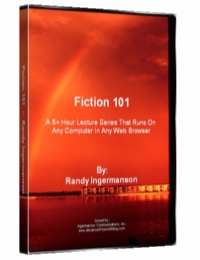
Product Review: Fiction 101, by Randy Ingermanson

Fiction 101 writing courseFiction 101, by Randy Ingermanson

Best known as “the Snowflake Guy”, novelist Randy Ingermanson is a popular teacher of fiction writing techniques and marketing. His Fiction 101 is a series of lectures and handouts that writers can use as part of their professional development.

Some of the material included in this course is available on his website: definitions of different writing stages, the Snowflake method etc. I’d recommend checking out what writing level you’re at before buying, although even the most experienced writers can benefit from a refresher of fiction basics.

Fiction 101 is for people who want to write novels, and it looks at the craft and components – and the necessary commitment. Randy’s lectures are easy to follow and laced with humour. He gives practical examples of what works and what doesn’t, and often suggest books for further study.

The course looks at key issues like characters, motivation, point of view, plot (on three levels: the big picture [beginning – middle – end], the medium picture [scenes and sequels] and the little picture [motivation-reaction units]), dialogue, theme.

Fiction 101 wouldn’t be complete with Randy’s signature “Snowflake” method for novel design. If this course isn’t for you, you might still want to check out his Snowflake method.

He says he doesn’t teach writers to create, but to analyse and organize that creation. This can be done ahead of time or after the first draft, whichever suits your style. He encourages students to adapt the Snowflake stages to suit their needs.

To help you along, the course includes a blank character chart and a sample Snowflake and scene spreadsheet.

As well as the basic craft of fiction, Fiction 101 addresses work habits and conferences. These talks come at the end of the course, after we’ve studied the basics of the craft, and they’re very candid about the work involved. Having come this far, we’re not likely to scare easily, but if we’re to progress we need to be intentional.

Randy Ingermanson bills himself as “America’s mad scientist of fiction writing.” His monthly Advanced Fiction Writing E-zine always contains something helpful. It’s free, and back issues are available on the site. Along with his six novels, he’s also written Writing Fiction for Dummies.

Fiction 101 is available as an electronic download for $80 USD. You can listen to the first Fiction 101 lesson for free.

Take Flight Progressive Interview

Author and social networker Patty Wysong started Take Flight as a way to encourage, inspire and connect bloggers. This week’s Flight is a progressive interview, and the questions have been a lot of fun.

Here’s my question, and my Take Flight blogging friends’ answers. Each blogger’s name is linked to her own blog. Follow the links and discover other intriguing questions… and answers.

Thanks for setting this up, Patty!

Question: In what way(s) have your characters rubbed off on you? (for the better, we hope!)

Diana Lesire Brandmeyer: I’ve learned that I really do appreciate living in 2012 not 1886 but I have learned to take things at a slower pace. I’ve come to enjoy making dinner more than before and am learning to use herbs and fresh ingredients. I take time to enjoy the small tasks like baking and planting.

Sharon Clements Srock: I think my characters have made me a stronger person, more determined to go for what I want. It’s hard to write about determined women and be a wimp.

Joanne Sher: I think my main character has taught me SO much about myself – and even given me some ideas on handling conflicts and such. She started out as, basically, me transplanted to Biblical times. She’s becoming her own woman as I “fix her up,” but writing about her has made me see myself more clearly. Weird, eh?

Yvonne Blake: I think it’s often the other way around for me. I tend to put a little bit of myself in each of my characters. (Sometimes, though, I give them traits that I wish I had the courage to show – ex. boldness to speak up and act without fear of what others may say.)

Valerie Friesen Comer: Interesting question, because I usually think of it the other way: what of myself do I put in my characters? By giving my characters traits that I see in myself, though, I can push the envelope to make them deal with it. This helps me explore the trait and hopefully find ways to deal with it in my own life as well. But don’t go looking too deeply into my characters to find my issues! The characters are always a blend of a bunch of people with other traits tossed into the mix.

Linda McQuinn Carlblom: My characters keep me young! They’re all children, none over 14 or 15, and they force me to think and speak like someone their age. I have to remember how I felt at their age and write that into the story. So I have a greater empathy for kids because of my characters.

Donna Winters: I seem to sympathize emotionally with my characters. If they’re having a bad scene, my husband says I’m irritable. I find their snappy dialog slipping into my real-life dialog. Poor Fred. He’s quite tolerant and forgiving. 🙂

Sharon Hoover: My characters have made me more reflective. To better write about an emotion … and be able to show the feelings … I’ve had to deeply examine my own heart and motives as well as be more attentive to those around me.

Patty Sargent Wysong: My characters have helped me see life and its situations differently from how I used to see things. There’s a whole new world out there when I look at things through the eyes of my characters and when I listen to their explanations of things, often it meshes with my view and gives me a clearer picture of what’s going on. Of course, that means I hear their voices in my head, too. They’re loudest when I’m doing the wrong thing. My cast of characters has made for some interesting times in my head, but they’re each leaving a mark on me, just like my living-breathing friends do.

Kristi Peifer: It’s sort of like acting … you delve into another person’s psyche and learn all about their feelings and their quirks. Some of my favorite characters have been the ones with snappy one-liners, but I’ve also learned from the tragic characters.

Christina Rich: My characters have shown me that it doesn’t matter what the world thinks as long as I’m following God.

Janet Sketchley (that’s me): Learning to understand my characters has taught me to think more about real people’s motivations and give them the benefit of the doubt. One of my characters has given me a new appreciation for Billy Joel and for peppermint tea. I was hoping her housekeeping tendencies would rub off instead, but no such luck.

What about you? Whether you’re a writer or a reader, tell us how fictional characters have rubbed off on you? 

Powered by Linky Tools

Click here to enter your link and view this Linky Tools list…